

Bladder Prolapse Symptoms in Women in Glendale, CA
Bladder prolapse, also known as cystocele, occurs when the bladder bulges into the front wall of the vagina due to weakened pelvic floor support. Common symptoms include pelvic pressure, vaginal bulging, urinary leakage, and difficulty emptying the bladder. Our clinic offers gynecology and urogynecology services in Glendale, CA, for women experiencing bladder prolapse symptoms. Dr. Prema Kothandaraman, MD, FACOG, and our clinical team help patients understand their symptoms and available evaluation options. For more information, contact us or book an appointment online. We are conveniently located at 1505 Wilson Terrace #320, Glendale, CA 91206.
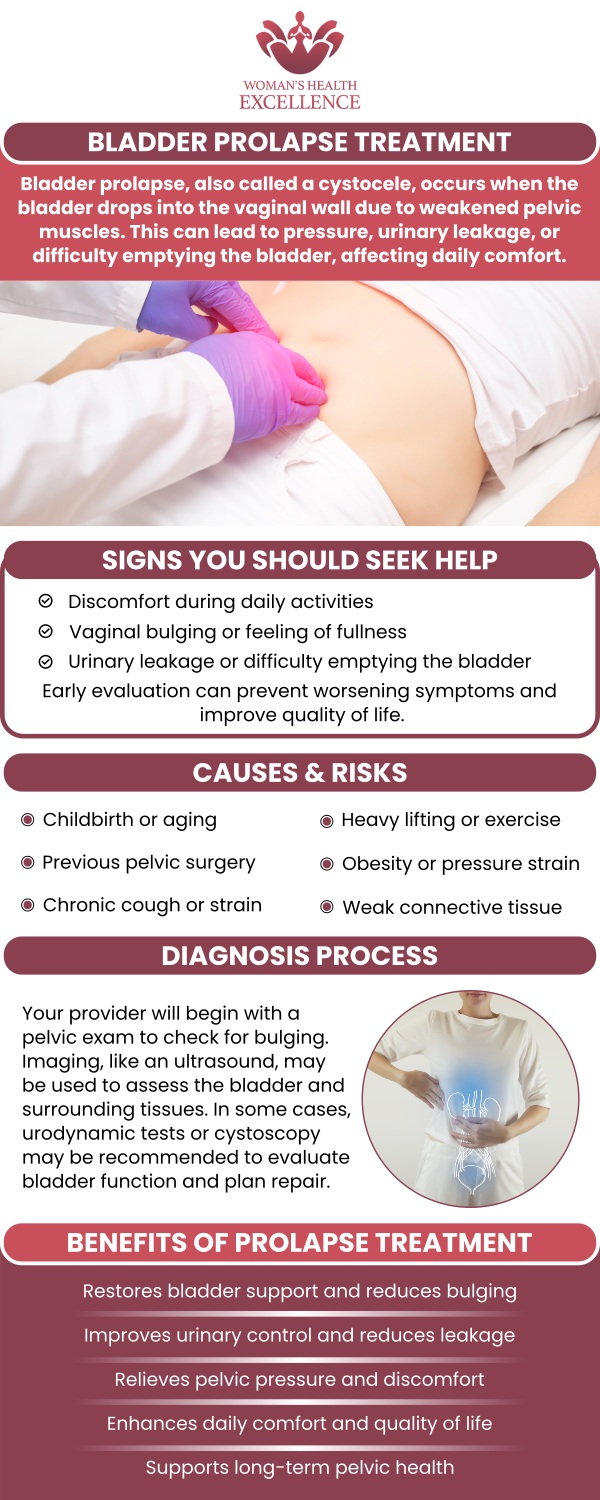
Table of Contents:
What Are the Early Signs of Bladder Prolapse?
What Does a Prolapsed Bladder Feel Like?
Can Bladder Prolapse Cause Urinary Problems?
How Do Bladder Prolapse Symptoms Affect Daily Activities?
Can Bladder Prolapse Symptoms Become Worse Throughout the Day?
When Should You Seek Medical Care for Bladder Prolapse Symptoms?
Bladder Prolapse Evaluation With Dr. Prema Kothandaraman and Our Clinical Team in Glendale, CA
Can bladder prolapse cause a feeling of something stuck in the vagina?
Can bladder prolapse cause difficulty emptying the bladder after urination?
Can bladder prolapse cause discomfort while walking or exercising?
Can bladder prolapse be present without a visible vaginal bulge?
Can bladder prolapse cause repeated urinary tract infections?
Schedule a Gynecologic Appointment in Glendale, CA
Medical References
Bladder prolapse, also known as cystocele or fallen bladder, occurs when the supportive tissues between the bladder and vaginal wall weaken or stretch, allowing the bladder to bulge into the front wall of the vagina. Women experiencing this condition may notice pelvic pressure, vaginal bulging, urinary leakage, or difficulty emptying the bladder completely. Symptoms can vary depending on the degree of prolapse and individual health factors.
Our clinic offers gynecology and urogynecology services in Glendale, CA, for women experiencing bladder prolapse and related pelvic health concerns. Our team includes Dr. Prema Kothandaraman, MD, FACOG, and healthcare professionals focused on women’s health, urinary incontinence, pelvic organ prolapse, and gynecologic concerns. Patients can discuss their symptoms, understand available evaluation options, and request an appointment.
Early signs of bladder prolapse may be subtle and can develop gradually. Some women initially notice a feeling of heaviness or pressure in the pelvic area, while others experience changes in their urinary habits.
Common early signs include:
• A feeling of fullness or pressure in the vagina.
• A sensation that something is bulging or falling downward.
• Urine leakage during coughing, sneezing, or physical activity.
• Frequent or urgent urination.
• Difficulty emptying the bladder completely.
• Discomfort during sexual intercourse.
Some women may have bladder prolapse without noticeable symptoms. Recognizing changes in pelvic comfort and urinary function can help determine when a gynecologic evaluation may be appropriate.
A prolapsed bladder may feel like heaviness, pressure, or fullness in the vaginal or pelvic area. Some women describe a sensation that something is coming down or a soft bulge near the vaginal opening.
The sensation may become more noticeable after standing for extended periods, lifting objects, coughing, or straining. Some women experience relief when lying down. Others notice discomfort during everyday activities or while using the bathroom.
The way bladder prolapse feels can depend on how much the bladder has moved from its normal position. A gynecologic examination can help determine whether these sensations are related to cystocele or another pelvic health condition.
Yes. Bladder prolapse can affect the way urine is stored and released. When the bladder and surrounding vaginal support tissues change position, some women experience urinary symptoms.
These may include:
• Frequent urination.
• Sudden urges to urinate.
• Urine leakage when coughing, laughing, or sneezing.
• Difficulty starting the urine stream.
• A weak or interrupted urine stream.
• A feeling that the bladder has not emptied completely.
• Recurrent urinary tract infections.
Not every woman experiences the same urinary changes. Some may primarily notice leakage, while others experience difficulty emptying the bladder. Persistent urinary symptoms deserve medical attention because they can have several possible causes.
Bladder prolapse symptoms can interfere with everyday activities, particularly when pelvic pressure or urinary changes become more noticeable.
Women may experience discomfort while walking, exercising, standing for long periods, or lifting objects. Frequent bathroom visits and sudden urinary urges can also interrupt work, travel, and social activities.
Some women experience discomfort during intimate activities or feel concerned about a vaginal bulge. These changes can affect confidence and overall comfort.
The effect on daily life varies. Some women have mild symptoms, while others experience more noticeable changes in their pelvic and urinary health.
Yes. Some women notice that pelvic pressure, vaginal heaviness, or the sensation of bulging becomes more noticeable as the day progresses.
Symptoms may increase after prolonged standing, walking, lifting, coughing, or straining. Lying down may reduce the pressure or discomfort for some women.
Changes in symptom intensity do not necessarily indicate how severe the prolapse is. A gynecologic evaluation can help assess the condition and determine whether additional urinary or pelvic health concerns are present.
Women experiencing vaginal bulging, persistent pelvic pressure, urinary leakage, frequent urination, or difficulty emptying the bladder should consider scheduling a gynecologic evaluation.
Medical attention is particularly important when symptoms begin interfering with daily activities, physical comfort, or normal bladder function.
Seek prompt medical attention if you experience an inability to urinate, significant pelvic pain, blood in your urine, or urinary symptoms accompanied by fever. Inability to urinate requires emergency evaluation.
A healthcare professional can review your symptoms, medical history, and pelvic health to determine whether bladder prolapse or another condition may be responsible.
Dr. Prema Kothandaraman, MD, FACOG, provides gynecology and urogynecology services at our Glendale office, focusing on women’s pelvic health, bladder prolapse, urinary incontinence, and related gynecologic concerns. Women experiencing pelvic pressure, vaginal bulging, urinary leakage, or difficulty emptying their bladder can discuss their symptoms and health concerns during a gynecologic consultation.
Our clinic offers care for women experiencing bladder prolapse and other pelvic health conditions. Our team focuses on patient education, understanding individual symptoms, and discussing appropriate evaluation options. Patients can learn more about our services and request an appointment at our Glendale office.
Yes. Some women describe a sensation of fullness, pressure, or something stuck inside the vagina. This may occur when the bladder bulges against the front vaginal wall. The sensation can become more noticeable when standing or straining.
Yes. A cystocele may affect the position of the bladder and urethra, making it difficult to empty the bladder completely. Some women notice a weak urine stream, difficulty starting urination, or the feeling that urine remains after using the bathroom.
Yes. Pelvic pressure and vaginal heaviness may become more noticeable during activities that increase pressure on the pelvic floor. Walking, prolonged standing, lifting, and exercise may make symptoms more noticeable in some women.
Yes. Mild bladder prolapse may cause pelvic pressure or urinary changes without an obvious bulge. Some women also have no noticeable symptoms. A physical and pelvic examination can help identify whether prolapse is present.
Bladder prolapse can sometimes interfere with complete bladder emptying. Retained urine may increase the risk of urinary tract infections. However, recurrent infections can have other causes, so an appropriate medical evaluation is important.
Bladder prolapse can cause changes in pelvic comfort, vaginal support, and urinary function. Recognizing these symptoms and understanding their possible causes can help women make informed decisions about their pelvic health.
Our clinic offers gynecology and urogynecology services in Glendale, CA. Dr. Prema Kothandaraman, MD, FACOG, and our clinical team provide care for women experiencing bladder prolapse, urinary incontinence, and other pelvic health concerns.
For more information, contact us or book an appointment online. We are conveniently located at 1505 Wilson Terrace #320, Glendale, CA 91206. We serve patients from Glendale CA, Pasadena CA, Alhambra CA, Arcadia CA, Burbank CA, San Marino CA, Altadena CA and surrounding areas.
Check Out Our 5 Star Reviews



Additional Services You May Need
▸ Urogynecology
▸ Minimally Invasive Gynecology
▸ Monalisa & Medical Aesthetics
▸ Bioidentical Hormone Replacement Therapy
▸ Urinary Incontinence
▸ Pelvic Organ Prolapse
▸ Painful Bladder
▸ Urinary Tract Infection
▸ Genitourinary Syndrome of Menopause
▸ Female Sexual Dysfunction
▸ Urinary Retention
▸ Vaginal Laxity & Prolapse
▸ Postpartum Pelvic Floor Problems
▸ PCOD
▸ Bladder Prolapse Repair
▸ Urgent PC
▸ Fibroids
▸ Excessive Bleeding
▸ Pelvic Pain
▸ Birth Control & IUD
▸ Vaginal & Pelvic Infection
▸ Monalisa Touch
▸ STD
▸ TempsureVitalia
▸ Biote Pellet Therapy
▸ Topical BHRT
▸ Flexsure
▸ Rectal Prolapse Repair
▸ Tempsure ENVI
▸ Minimally Invasive Pelvic Surgery for Incontinence


 Send Text
 How May I Help You?